
Where Time Breathes
- Apr 9
- 6 min read

Where Time Breathes: A Day Along the West Coast's Hidden Heartlineere Time Breathes
A quiet day trip from Cape Town that feels less like sightseeing
13 September 2025
I’m propped up against too many pillows in my little farmhouse room, window cracked open to the cool West Coast air, the faint smell of dust and fynbos drifting in. The walls are thick and whitewashed, the beams above my head are old ship’s timber, and somewhere outside an owl keeps repeating the same soft question into the dark. My phone signal is too weak to do anything useful, and for once I’m grateful. Tonight, the only thing I want is to get this day down before it slips into the lazy shorthand of memory.
Because this wasn’t just “a nice day trip from Cape Town.” This was something else entirely.
It started at first light, me half asleep behind the wheel, one of the first cars through the West Coast National Park gates. The lagoon was still and pale, like someone hadn’t quite finished painting it in yet. I drove straight to Kraalbaai and stepped out into a silence that felt almost staged—no other people, no engines, just the soft lap of water and a faint, far-off breaking of surf from the ocean side.
Standing there, looking at that glassy blue lagoon and the Preekstoel rock rising like a worn stone pulpit from the shore, it hit me where I was: on the same stretch of sand where they found the 117,000-year-old footprints of a woman we now call “Eve”. Not a myth, not a metaphor—an actual Homo sapiens woman who stood here when there were no fences, no roads, no flags, no countries. The landscape looks almost exactly the same. I tried to picture her feet in the wet sand, the same wind, the same surf, the same smell of salt and sun on rock. I don’t know how to describe the feeling except to say it shrank my lifetime down to its proper size and somehow made it more precious at the same time.
From there the day just kept unfolding, one impossible scene after another. Sixteen Mile Beach was all muscle and noise—a long white line of breakers pounding the shore with that deep, repetitive thud that makes your bones feel old. I walked a little way, thinking about strandlopers reading the tides and currents here like a book, long before any chart existed. I felt tiny and wildly connected, both at once.
And then: the flowers.
Every guidebook told me, “If you’re in Cape Town in September, try to catch the West Coast flowers.” That phrase now feels so criminally inadequate I want to go back and scribble in the margins. This isn’t “catching some flowers.” This is walking into a living painting that somebody keeps repainting while you look at it. Whole hillsides of white daisies so dense they look like snow, until you get closer and see each perfect star-shaped face turning to the sun. Rivers of purple vygies in every shade from lavender to electric magenta, flowing between the whites like spilled ink. Shocking pools of orange gazanias, so bright they seem to be lit from inside. Soft washes of pink and coral sneaking through the gaps, tying everything together.
At some point I just stood there, turning in a slow circle, trying to store the whole 360 degrees in my head. Eland grazing in the middle of it all as if they’d wandered into the world’s most extravagant garden by mistake. Bontebok flicking their white tails against a backdrop Monet would have dismissed as unbelievable. A tortoise lumbering along like it had all the time in the world, which, compared to me, it probably does.
I kept promising myself I would stop pulling over for “just one more photo.” I failed, again and again.
Churchhaven was another world entirely. Turning off the main road felt like slipping into a different century. No tar, no power lines, just bright white sand tracks winding between low green fynbos and these small, perfectly plain houses that look like they’ve grown out of the earth. Thick stone walls made from calcrete and mussel shell, roofs thatched with local reeds, everything the colour of sun, lime, and time.
I’d been invited for tea, which already sounded slightly surreal when I got the message. It turned out to be one of the most quietly powerful hours I’ve had on the road. Inside: bone china cups that had once crossed oceans, still being used as if breakage was never a real threat; warm scones with proper jam and too much butter; a table scarred just enough to prove a life well lived. Outside the open window: lagoon blue so intense it looked fake, fynbos trembling in the breeze, a Cape grysbok grazing like it had no idea how extraordinary this all was.
My host, whose family has been here for generations, said one sentence I think will stay with me for life: “We don’t preserve history. We inhabit it.” And suddenly the absence of electricity, the ban on tarred roads, the insistence on building the old way—all of it made sense. It isn’t about being stuck in the past. It’s about choosing to live in step with a place rather than stamping over it.
By midday, I was already behind schedule, and the park had clearly decided I was its student for the day. Eland, bontebok, springbok, Cape Mountain zebra, ostriches trotting around like leftover dinosaurs, mongoose flashing across the track, tortoises taking their sweet time. Every time I said, “Right, I can’t stop again,” something else appeared and I pulled over anyway.
At Geelbek bird hide, a kind older man handed me his spare binoculars without a word and suddenly the whole lagoon came alive. Flamingos painting soft pink reflections across shallow water. Pelicans gliding in slow, heavy arcs. Tiny waders with absurdly long names and longer journeys, some of them having flown from as far as Russia to stand in ankle-deep West Coast mud. I told him, truthfully, “I’m not really a birder.” He smiled and said, “You are now,” and just like that, I was.
The little white building on the hill—part museum, part lookout—nearly broke me. I arrived with fifteen minutes before I absolutely had to leave if I didn’t want to be locked in the park. Inside was a compressed universe: whaling photos from Donkergat, maps of ancient shorelines, stone tools older than any country on earth, logbooks, charts, waves of handwritten captions explaining how this lagoon has been a stage for everything from Khoisan life to submarine hunting in World War II. Through the window, the lagoon stretched out impossibly calm, and in the far distance, Table Mountain floated on the horizon like a mirage.
I needed an hour and a half. I had a quarter of one. Leaving felt wrong, like walking out of a story halfway through the best chapter.
And yet, somehow, the day wasn’t done. I drove out as the light softened, past the same flowers and animals and dunes that had stunned me that morning, and felt this tight, unexpected ache in my chest: I did not want to leave. Every guide says, “You can see the park in a day.” Tonight, sitting here with my pen racing, I can say that’s technically true and emotionally nonsense. A day gives you a glimpse. This place deserves more.
Now I’m in this 1860 farmhouse room, the floor gently uneven under my bare feet, the walls holding 165 years of other people’s evenings, and I’m trying to find a way to say this as simply as possible: if you’re coming to Cape Town and you skip this, you’re missing one of the great quiet experiences of this part of the world.
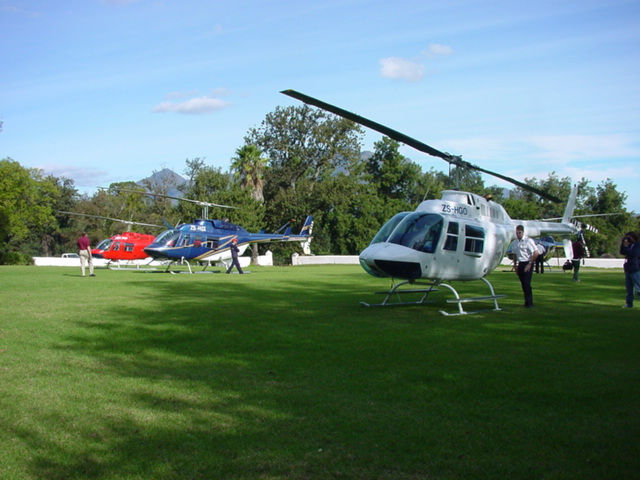
Not the loud ones—the shark cages or the helicopters or the vineyards with live bands and long lunch reservations. Those all have their place. But this day along the West Coast’s hidden heartline, from Kraalbaai to Churchhaven to Geelbek and back again, was something rarer: a day that slowed me down enough to feel time breathing around me. Geological time, human time, the fleeting life of a flower, the stamina of a migrating bird, the patience of people who choose to live in step with a place instead of constantly trying to remake it.
I’ve visited sixty-two countries. I’ve seen big things, famous things, “top ten bucket list” things. But tonight, if you asked me where to send someone with one free day near Cape Town who wanted to be surprised by how deeply a place could move them, I’d send them here, to this park, without hesitation.
My eyes are heavy. The lagoon outside has disappeared into blackness. Somewhere in the distance, a car door slams and a dog barks once, then thinks better of it. Tomorrow, I’m supposed to move on according to the plan I drew up months ago. But the truth is, I’m already rearranging that plan in my head. I want one more day. Not as a box-ticking visitor, but as a willing student.
If I ever forget why I travel, or start to treat South Africa’s West Coast as just “the bit between Cape Town and the next highlight,” I hope I find these pages again. I want to remember what it felt like, just for one absolutely peach of a day, to walk through a landscape that didn’t just show me beautiful things—it quietly suggested a different way of being in the world.


Comments